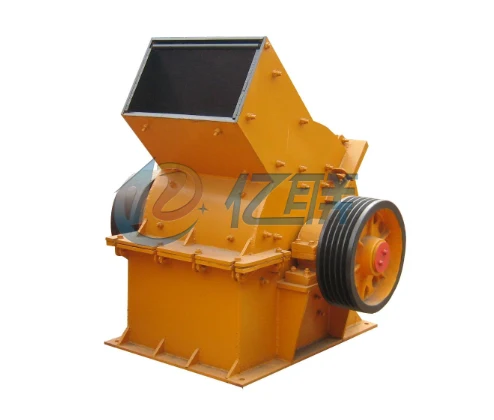
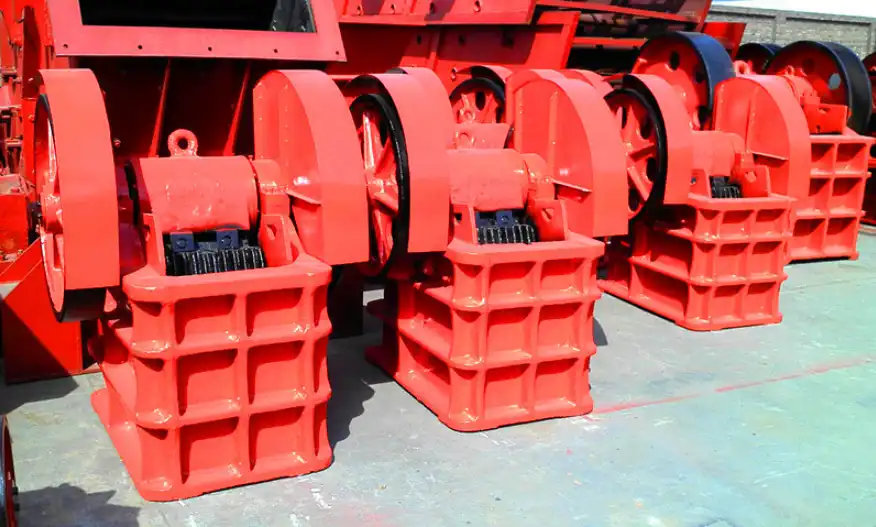
When observing a jaw crusher, one of the most noticeable components is the pair of large round wheels located on both sides of the eccentric shaft. These are commonly known as flywheels.
Many users often ask: What exactly does the flywheel do?
Although it may seem like a simple rotating wheel, the flywheel plays a critical role in the crushing process and significantly affects the performance and efficiency of a jaw crusher.
This article explains the importance of the flywheel, why jaw crushers require it, and how it contributes to smooth and stable operation.
1. What Is a Flywheel in a Jaw Crusher?
A jaw crusher typically has two flywheels—one on each side of the eccentric shaft:
- One flywheel connects to the triangular belt and drives the machine.
- The other flywheel looks similar but does not connect to a belt.
Although simple in appearance, these flywheels are essential for balancing the machine’s motion and ensuring stable crushing.
2. Why Does a Jaw Crusher Need Flywheels?
2.1 To Store and Release Energy Efficiently
Jaw crushers operate using a reciprocating motion generated by the eccentric shaft. This motion requires alternating high and low energy during each cycle.
The flywheel acts as an energy storage device:
- It stores excess energy during the idle stroke.
- It releases stored energy during the crushing stroke.
This ensures consistent crushing force and prevents sudden power fluctuations.
2.2 To Maintain Stable Speed and Reduce Vibration
Without flywheels, the jaw crusher would experience:
- uneven rotational speed
- unstable crushing movement
- increased vibration
- reduced efficiency
Flywheels stabilize the rotational speed, allowing the machine to operate smoothly even under heavy load.
2.3 To Reduce Motor Load and Improve Efficiency
The flywheel helps redistribute energy through each crushing cycle, which:
- lowers peak power demand
- reduces load on the motor
- allows the crusher to run more efficiently
- decreases energy consumption
This contributes to longer motor lifespan and lower operating costs.
3. Why Is One Flywheel Non-functional in Appearance?
Many users notice that only one flywheel is connected to the drive belt, while the other looks like it “does nothing.”
In reality, the second flywheel is installed to:
- balance the weight of the moving jaw
- maintain dynamic equilibrium
- ensure smoother rotation
- reduce shaft stress
- avoid mechanical imbalance
This counterweight effect prevents damage to the eccentric shaft and prolongs equipment life.
4. What Happens If a Jaw Crusher Has No Flywheel?
Without a flywheel, the machine would experience:
- severe inertia imbalance
- unstable crushing force
- increased mechanical wear
- high vibration levels
- frequent motor overload
- shortened equipment lifespan
Therefore, flywheels are indispensable components in jaw crusher mechanical design.
5. Why Choose Yilian Machinery Jaw Crushers?
At Yilian Machinery, our jaw crushers are engineered with:
- High-precision flywheel design
- Heavy-duty eccentric shafts
- Durable cast-steel frames
- Reliable bearing systems
- Strong crushing capacity for various materials
- OEM/ODM customization for global industries
Whether you are in mining, construction materials, metallurgy, aggregates, or chemical production, our jaw crushers deliver stable performance and long service life.
Conclusion
Although often overlooked, the flywheel is one of the most important components of a jaw crusher.
It ensures energy balance, reduces motor load, stabilizes rotational speed, and guarantees efficient crushing performance.
For high-quality jaw crushers and spare parts—including flywheels, eccentric shafts, and jaw plates—Yilian Machinery provides reliable manufacturing with strong technical support for global customers.